
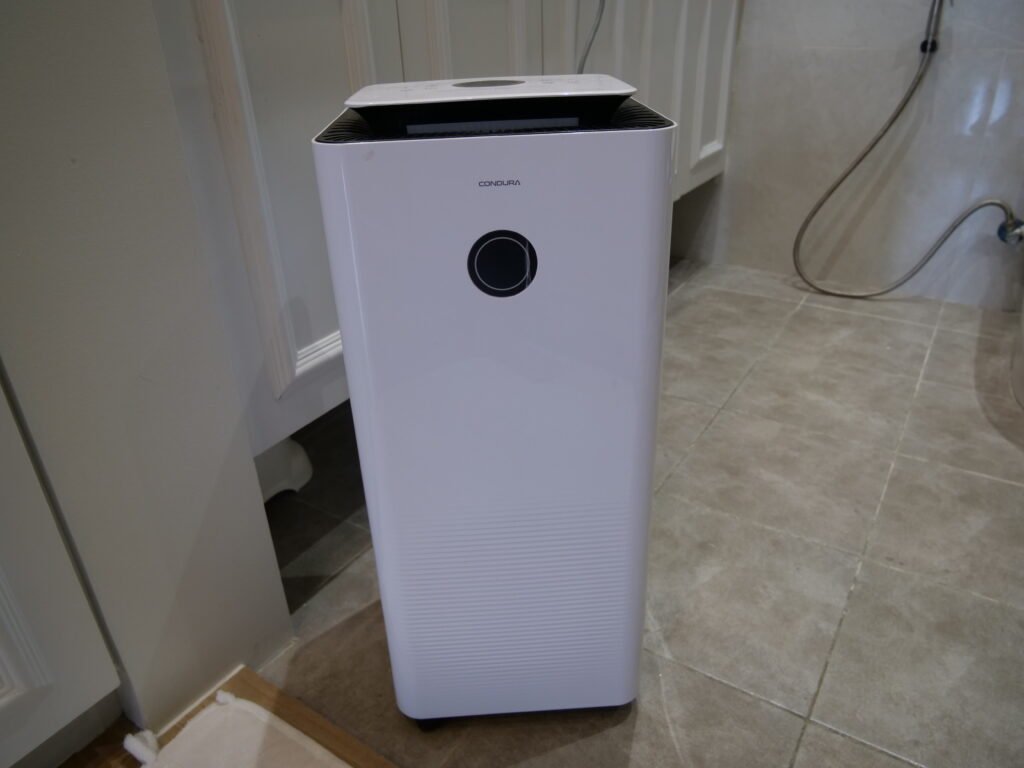
Looking for the best dehumidifier in the Philippines? After using six models myself, my top picks are Condura 20L for value and capacity, Simplus 12L when discounted, and Sharp if you also want air purification. Here are the six models in my hands-on comparison: Condura, Kolin, Midea, Simplus, Cherry Home and Sharp. I checked electricity use, clothes drying, humidity controls and the everyday job of emptying their water tanks.
I tested these dehumidifiers in the warehouse where I live with 28 rescued cats. I also store many appliances there, so keeping the space dry matters. I manage rental properties as well, and regularly see how appliances perform in fully furnished homes.
Pepper, Riley and Traveller are among the cats most likely to cause mischief. Around curious cats, a flat appliance top quickly becomes a sleeping spot, and a control panel becomes something to step on. A dehumidifier needs to keep working at the setting I chose. Controls that paws can change, a missing control lock and an awkward water tank all affect how convenient a machine is for me.
Affiliate disclosure: This article contains affiliate links. I may earn a commission if you purchase through them, at no extra cost to you.

THE QUICK VERDICT
My top dehumidifier picks
Three favorites from my hands-on testing, each for a different need.
01 Condura 20L — 4.8/5
Best overall value. Great capacity and useful modes; the missing control lock is still my biggest gripe.
02 Simplus 12L — 4.7/5 discounted
My budget pick when discounted. At full price, I rate it 4.4/5. Value matters.
03 Sharp purifier / dehumidifier — 4/5
The dual-purpose pick if you want both air purification and dehumidifying. Useful, but expensive.
Why these three?
My pick for value and capacity: Condura 20L, with a major drawback. I like its balance of purchase price, capacity and useful settings. However, the unit I tested has no control lock, and its top controls are easy for cats to disturb. That costs it a lot of points in a warehouse home with 28 cats.
My budget pick when discounted: Simplus 12L — 4.7/5 when discounted, 4.4/5 at full price. I liked its side airflow, humidity indicator and performance at the prices I encountered. Availability and preorder waits can be frustrating.
My pick for both air purification and dehumidifying: Sharp. Its moving airflow and useful combination of functions stood out. The purchase price is high, and its running cost needs to be measured across a complete drying session.
These are my choices from the units I tested; the individual reviews below explain the strengths and compromises. For measured fan power use and everyday cooling, see my Acerpure F1 vs F2 vs Midea inverter fan comparison.
Dogman’s ratings and quirks
My score is out of five and reflects the whole experience: how well the machine works, what it costs, and how convenient it is to live with. Value matters. A useful appliance can lose points when the price makes my wallet wince.
Dogman’s criteria
- Does it do the job? Moisture removal, useful modes, airflow, and keeping my warehouse home dry.
- Is it worth the money? Purchase price and useful features count heavily in my overall verdict.
- What does it cost to run? Power readings and running-cost estimates, with a full session more useful than one low reading.
- Can I live with it every day? Water tank handles, cleaning, noise, portability, and controls.
- Can the cats meddle with it? A control lock and buttons that are harder to disturb matter in a home with 28 cats. The cats do not read the manual. They do inspect the sleeping surface.
The Dogman labels
- 🐶🔥 Dogman Approved. Great. A strong recommendation for the use and price described.
- 🐶👍 Dogman Approved. Workable. A useful product with compromises to consider.
- 🐶🤏 Dogman Approved. Adequate. Does the basics, with limited reasons to get excited.
- 🐶💀 Dogman Says. Dog Barf. A product I would not recommend based on my experience.
The number is my overall score; the label is my practical verdict. These are personal ratings from the units and conditions I tested.
Where to buy the dehumidifiers I tested
These are my Shopee links for the six brands I reviewed. Check the model, seller, warranty, current price and availability before ordering.
Affiliate links: I may earn a commission from qualifying purchases at no extra cost to you.
Want to work out costs using your own electricity rate? See my electricity-cost guide. I also measured the power draw of three inverter fans at different speed settings.
Dehumidifier electricity consumption and running costs
The table uses the same example rate of ₱11 to ₱15 per kWh for every unit. It compares running power, not electricity used to remove a litre of water.
| Model | Power basis from my notes | Estimated cost for one hour at that draw | Main observation |
|---|---|---|---|
| Condura 20L | 250 to 300 W observed | ₱2.75 to ₱4.50 | Good value and capacity; no control lock is a major drawback around cats |
| Kolin 20L — KDM-20LES | 380 W rated input on my unit label | ₱4.18 to ₱5.70 | Simple controls; harder for resting cats to operate |
| Midea 12L | 300 W recorded | ₱3.30 to ₱4.50 | Older unit still working; Pepper’s weight did not change the settings |
| Simplus 12L | 165 to 190 W observed | ₱1.82 to ₱2.85 | Good value at the prices I encountered; useful side airflow |
| Cherry Home Pro 12L | Approximately 165 W observed | ₱1.82 to ₱2.48 | Performs well; purchase price is my main objection |
| Sharp air purifier and dehumidifier | 345 W rated figure in my notes | ₱3.80 to ₱5.18 | Useful combination of functions; low instantaneous readings are not a complete drying cost measurement |
The 12L and 20L labels refer to advertised dehumidification capacity, not necessarily the size of the water tank. Exact performance and capacity depend on the model and the conditions used for its rating.
How I tested dehumidifiers in my warehouse home
My testing setting was the warehouse where I live with 28 cats and store many appliances. I assessed the controls, noise, airflow, water collection, water tank handles, portability and electricity use. My priority is keeping this space dry in everyday use, while dealing with regular tank emptying and cats that climb onto the machines.
The readings and tank filling times below come from my own use under changing conditions. Room size, temperature, starting humidity, rain, open doors and the selected mode can all affect performance. A tank filling quickly does not automatically mean one machine is better than another, especially when the tanks have different capacities.
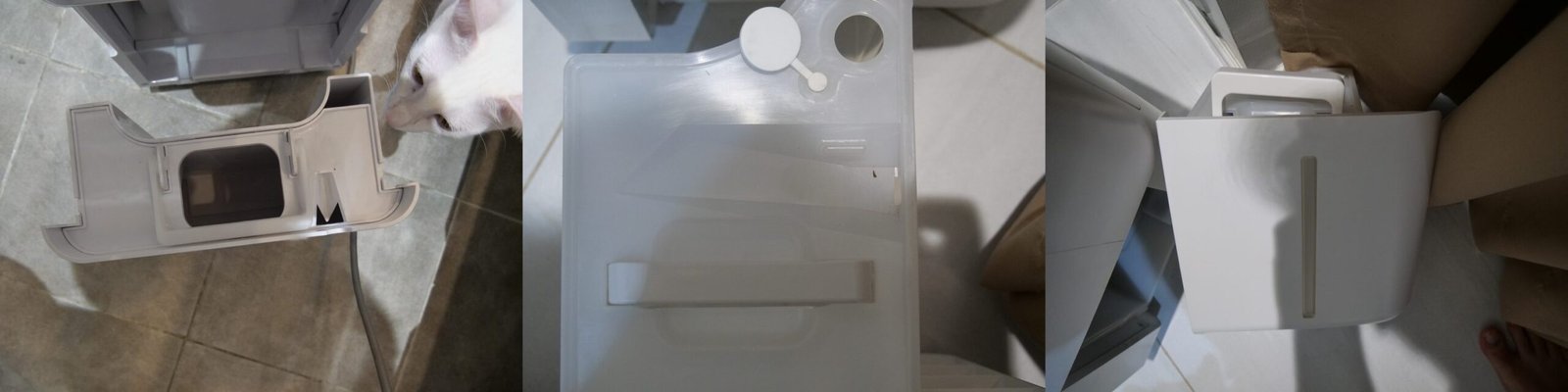
Water tank handles: which dehumidifiers are easier to empty?
Among the six units I tested, only the Sharp, Kolin, Midea and Condura have a handle on the water tank for carrying it to empty the collected water. The Simplus and Cherry Home tanks do not have that carrying handle. This is separate from a handle used to lift the whole appliance.
| Dehumidifier I tested | Handle on the removable water tank |
|---|---|
| Sharp | Yes |
| Kolin 20L | Yes |
| Midea 12L | Yes |
| Condura 20L | Yes |
| Simplus 12L | No |
| Cherry Home Pro 12L | No |
A tank handle sounds like a small feature until you have to carry a full tank to empty it. It makes a difference to my routine in a warehouse full of appliances and 28 cats. I consider tank handling alongside drying performance, power use and controls when judging overall convenience.
For the electricity estimates, I use an example rate of ₱11 to ₱15 per kWh throughout this article. This is a comparison range, not a claim about the current Meralco rate. Use the effective rate on your own bill for a closer estimate.
Cost per hour = watts ÷ 1,000 × electricity rate per kWh.
These figures assume the machine draws that amount of power for a full hour. If its compressor cycles on and off, its average electricity use can differ.
I also use the term standby consumption for the small readings seen when a unit is switched off but remains plugged in. A small wattage reading alone does not establish an electrical leakage fault.
Condura 20L dehumidifier review

The Condura 20L has several useful settings: continuous operation, automatic humidity control, laundry mode, timers and adjustable fan settings.
Continuous mode keeps running even after the room reaches the humidity level you would normally target. I find it useful for drying clothes or dealing with very damp conditions during heavy rain. For ordinary humidity maintenance, I prefer automatic control so the machine can stop dehumidifying once the target is reached.
Laundry mode uses continuous operation with a high fan setting. It works well for clothes drying, although the airflow goes straight upward. The Simplus blows from the side, which can be more convenient depending on where the clothes are hanging.
The coverage figure I have for the Condura is around 30 to 40 square meters. During use, I was seeing approximately 250 to 300 W. At the example electricity rates used here, that works out to about ₱2.75 to ₱4.50 per hour, depending on the draw and rate. At a steady 300 W, the estimate is ₱3.30 to ₱4.50 per hour.
I also recorded lower instantaneous readings of 216.2 W and 245.7 W. These document two moments during use, rather than an average for a full drying session.
With the unit off but plugged in, my meter showed approximately 0.1 to 1 W.
The main problem in my warehouse home is the control panel. The Condura unit I tested has no control lock. Its flat top is inviting to cats, and their paws can change the humidity target, alter the settings or switch the machine off. This happened during my use.
The missing lock costs the Condura a lot of points in my review. With 28 cats living around the appliances, this is a major weakness for me. I want the warehouse to stay dry at the setting I chose, and that becomes less convenient when a cat can interrupt the machine or change its target.
One practical positive is the handle on its removable water tank, which helps when carrying the collected water to empty it. That is useful, but it does not make up for the lack of a control lock.
Looks are subjective, but I think the Condura is one of the best looking units I tested. More importantly, I like the balance of purchase price, capacity and useful settings.
My verdict: 4.8 out of 5 — 🐶🔥 Dogman Approved. Great. For the price, the Condura is a bargain for what it does. Its useful modes, good capacity and practical everyday performance make it an appealing purchase for the money. My biggest gripe is still the missing control lock. With 28 cats, the control panel gets more unsolicited input than I would like. Its value keeps my overall score high, but that drawback stays in the review.
Kolin 20L dehumidifier review
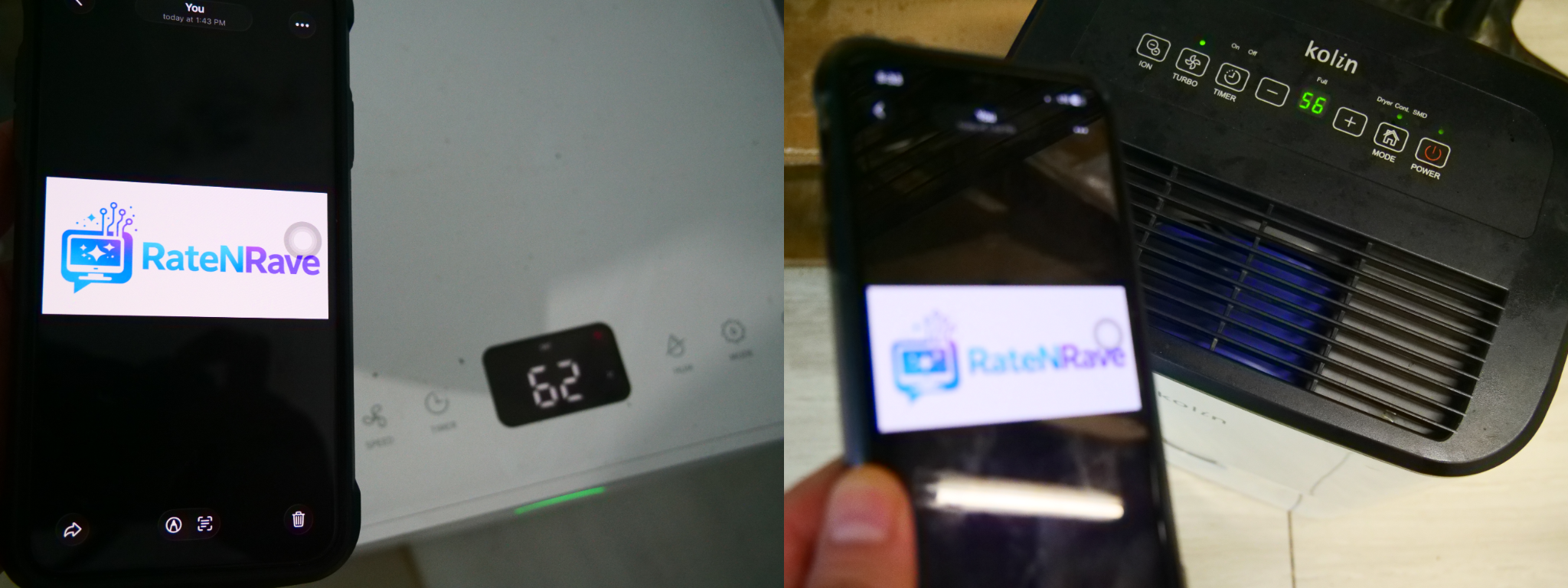
The Kolin 20L is straightforward to use and easy to clean. It does not have the humidity colour indicator I like on the Simplus; the feature visible on the front should not be mistaken for that kind of display.
The label on my unit identifies it as KDM-20LES, with a rated input of 380 W. At ₱11 to ₱15 per kWh, a steady draw at that level costs approximately ₱4.18 to ₱5.70 per hour. Rated input is a label specification; it is not an average measured over a complete drying session.
The same label gives a dehumidifying capacity of 20L per day at 30°C and 80% relative humidity, dimensions of 35 × 24.5 × 51 cm (W × D × H) and a net weight of 15.1 kg.
In a room of around 20 square meters, starting at approximately 70% humidity, it took about seven hours to fill the water tank. That is my test room size, not a confirmed coverage rating for the model. The filling time will also change with the weather and conditions.
The Kolin water tank has a carrying handle, which is useful when taking the collected water to empty it. Along with its less easily disturbed buttons, this adds to its everyday convenience in my warehouse home.
Standby consumption was approximately 0.1 to 1 W on my meter.
One advantage for cat owners is that the buttons were harder for a cat sleeping on top to operate. During my use, the controls were less easily disturbed than the Condura’s.
The Kolin was out of stock when I last checked, so availability is something to confirm before ordering.
My verdict: 4.3 out of 5 — 🐶👍 Dogman Approved. Workable. It is a straightforward machine. Sometimes I just want an appliance to get on with the job. Less button drama when a cat decides the top is a bed is a welcome bonus. The Condura has an advantage for me in purchase price and the lower wattage I observed, but the Kolin controls were less easily disturbed by my cats. With 28 cats sharing my warehouse home, that practical advantage matters when comparing the two.
Midea 12L dehumidifier review

The Midea 12L is an older model that I have not seen listed as often recently. Mine is still functioning, which is worth mentioning.
It is quite portable and has a handle on top for carrying the whole machine. The removable water tank also has its own handle for carrying it to empty the collected water. Those are two separate conveniences. The controls and humidity display are on top, although it does not have the colour indicator system found on the Simplus.
The power figure I have for it is approximately 300 W. At the example rate of ₱11 to ₱15 per kWh, that is approximately ₱3.30 to ₱4.50 per hour at a steady draw.
For a unit advertised as 12L, that makes it less appealing to me when compared with the lower wattage readings from the Simplus and Cherry Home. Electricity use alone does not tell the whole story, but it is something I notice when a machine will run for hours at a time.
I also observed some consumption while it was switched off but remained plugged in; I do not have a separate precise standby figure to quote here.
The buttons are easy for me to press, but the cats did not change the settings simply by resting on top. Pepper, who weighs around 4 kg, even slept there without her weight pressing the controls.
My verdict: 4.3 out of 5 — 🐶👍 Dogman Approved. Workable. The Midea is not the new kid on the block, but mine is still doing its job. I appreciate that. Pepper’s weight did not change its settings either, which counts as a small victory around here. If I were buying another dehumidifier today, I would still compare newer options first.
Simplus 12L dehumidifier review
I tried smaller Simplus units before and was not impressed; they felt more like gimmicks. The Simplus 12L changed my opinion. After several weeks of use, I was pleasantly surprised by its performance, build and electricity consumption.
It has a side blower. The outgoing air sometimes felt warm in hotter conditions; during rainy weather, it felt cooler to me. That is an observation about how the air felt, not a measurement of outlet temperature.
There are three settings labelled CNT, A and Sleep. I prefer A for ordinary use. With the target set to 40%, the sound was noticeable but quiet enough that it did not bother me.
The humidity setting runs from 30% to 80%. Repeatedly pressing the button increases the target until it reaches 80%, then cycles back to 30%.
I used a 40% target when the starting room humidity was around 80%. For general context, the US EPA recommends keeping indoor humidity below 60%, ideally between 30% and 50% where possible. That is a useful reference, although the setting you choose should also account for comfort and what your room can realistically maintain.
Using my Omni wattage meter, I saw approximately 165 to 190 W, compared with the listed 200 W. At those measured readings and the example electricity rates, the estimate is approximately ₱1.82 to ₱2.85 per hour. At a steady 200 W, it would be ₱2.20 to ₱3.00 per hour.
My comparison notes also recorded around 1 to 5 W while off but plugged in.
One feature I really like is the colour indicator. In my use, red appeared when humidity was high, with green and blue appearing as conditions improved. It is easy to understand at a glance; I would still use the numerical humidity reading when choosing a target.
CNT is the continuous setting I used for clothes drying. The airflow was stronger and noisier than in my usual setting, but it helped after washing clothes during rainy weather.
The machine is heavier than I expected from Simplus, but it feels solid. The wheels move well and make repositioning it easier. Give it the clearance required by its manual so the air can circulate properly.
The Simplus water tank does not have a carrying handle like the Sharp, Kolin, Midea and Condura tanks. Its wheels help with moving the appliance, but carrying a full tank to empty it is a separate part of everyday use.
The 2L tank filled in approximately these times during my tests:
| Starting humidity | Time to fill the 2L tank |
|---|---|
| 80% | 6 hours |
| 70% | 7 hours and 30 minutes |
| 60% | 9 hours |
These were separate observations, not tests conducted at a constant humidity throughout. Once the room is already drier and the unit is maintaining the target, the tank can fill much more slowly.
The collected water looked clear, but I do not treat it as drinking water.
Switching it on is quick. Switching it off is slower; it sometimes took around a minute, or longer, to finish shutting down.
Availability is the biggest inconvenience. It has sometimes been sold on preorder or gone out of stock, and waiting can be frustrating.
I bought mine for under ₱7,000 and have previously seen offers around ₱5,000. Those are prices I encountered, not guaranteed current prices.
My verdict: 4.7/5 when discounted — 🐶🔥 Great. 4.4/5 at full price — 🐶👍 Workable. Value matters. The Simplus 12L surprised me with its performance, solid build, side airflow and humidity indicator. A good discount makes it a stronger budget recommendation. The lower rating at full price reflects value for money, with the same compromises: possible delivery waits, slower shutdown and no carrying handle on the water tank. The machine performs the same job at either price; check the price and delivery date before buying.
Cherry Home Pro 12L dehumidifier review
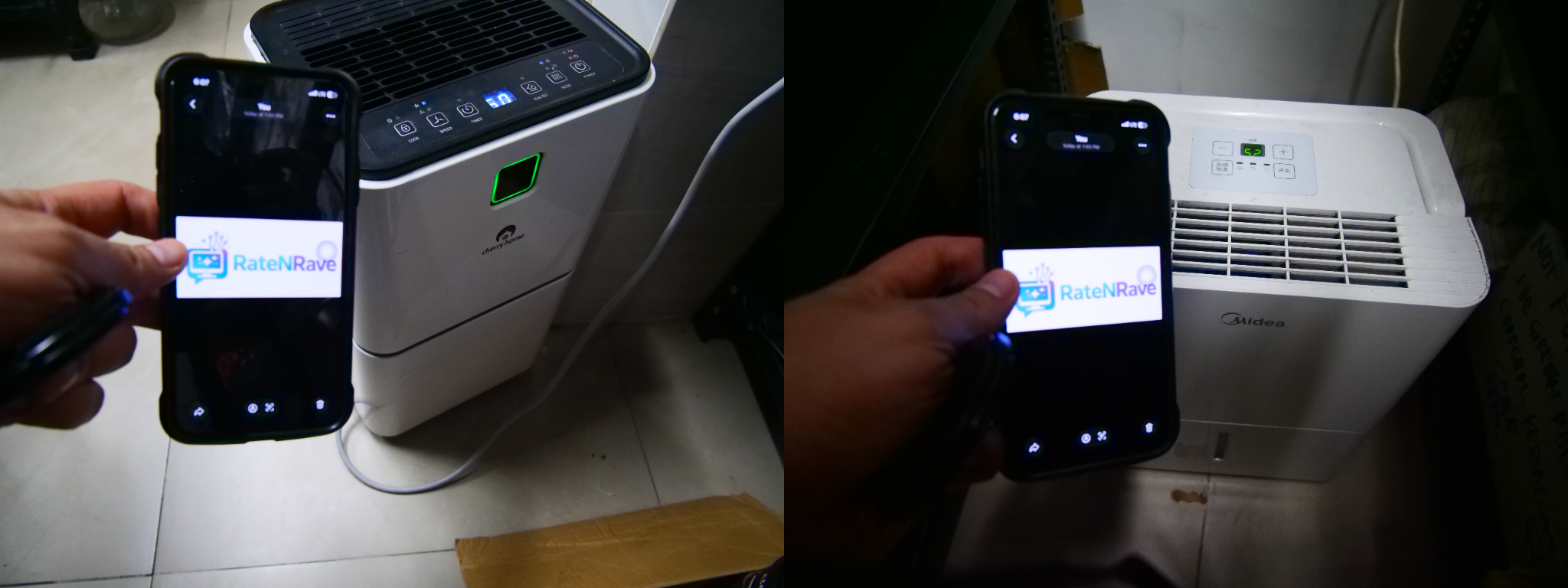
The Cherry Home Pro 12L works well, although its value depends heavily on the price. I have seen discounts on it, but the 12L version was out of stock when I last checked.
Its listed power figure is 185 W. During my own use, I saw approximately 165 W. At a steady 165 W and ₱11 to ₱15 per kWh, that works out to approximately ₱1.82 to ₱2.48 per hour. Using the listed 185 W figure instead gives approximately ₱2.04 to ₱2.78 per hour.
Standby consumption was approximately 1 to 5 W on my meter.
It takes a few minutes to get going properly. Once it starts, it runs well. Switching it off is quicker than its startup.
Changing the humidity target works in a similar way to the Simplus: press the button to increase the setting, then it cycles back to 30%. The wheels do their job, and the airflow goes upward.
The Cherry Home water tank does not have a carrying handle. As with the Simplus, that is a convenience I miss when emptying the collected water. The appliance wheels help with moving the unit, but they do not help with carrying the removable tank.
Clothes drying performance felt similar to the Simplus. At times it seemed a little faster, but I would not declare it the winner based on those observations; there were other factors changing between uses.
The measured wattage overlaps with the Simplus readings, so I would not call the Cherry dramatically cheaper to run just because its listed wattage is lower.
My verdict: A useful machine, but I find it expensive at its usual price. A substantial discount would make it more appealing.
Dogman rating: 4 out of 5 — 🐶👍 Dogman Approved. Workable.
Sharp air purifier and dehumidifier review


I put off reviewing the Sharp air purifier and dehumidifier because I wanted enough time to test both functions properly.
I have tried appliances advertised as serving two purposes where one function felt like an afterthought. This Sharp feels more useful to me: the dehumidifying, air purification, laundry drying and adjustable airflow all have a place in everyday use.
The coverage figures in my notes are approximately 67 square meters for dehumidifying and 32 square meters for air purification. Those are different functions with different coverage figures, so I would not treat them as interchangeable.
EXPENSIVE. There, capitals. The Sharp is useful, but my wallet would like a word about the purchase price. If this were half the price, I would give it 4.5 out of 5. At the price I paid, it stays at 4 out of 5. You need to use both functions to make that premium worthwhile.
High fan speeds can also get loud, the water tank is a little awkward to remove and replace, and the humidity controls could be more obvious. The Sharp water tank does have a carrying handle, which helps when taking it to empty the collected water, even though removing and refitting the tank could be easier.
In Auto mode, mine seemed to maintain the room around 55% to 60% humidity. To choose a lower target, I used the Select button in the dehumidifying settings, then the adjacent button to select the humidity level. The selectable range on my unit runs from 40% to 80%.
That means I can target 40%, but it took me longer than it should have to work out the controls.
What my wattage readings showed
The rated power figure in my notes is around 345 W. At a constant draw at that level, the estimated electricity cost is approximately ₱3.80 to ₱5.18 per hour using the same ₱11 to ₱15 per kWh comparison range.
During parts of my testing, however, my meter showed much lower readings:
| Observation or selected mode | Meter reading I observed |
|---|---|
| Low draw during parts of operation | 10 to 30 W |
| Mold Mode | 23 to 30 W |
| Laundry Mode | 15 to 20 W |
| Off or effectively idle while plugged in | 1 to 2 W |
These are the readings I saw at those moments. They do not prove that the machine continuously removes moisture at 10 to 30 W, or that it uses an inverter compressor.
A low reading could reflect fan operation or a period when the compressor is not running. The selected mode alone does not establish which components were operating when I took the reading.
For perspective, a constant 10 W costs approximately ₱0.11 to ₱0.15 per hour at the example rates; 20 W costs ₱0.22 to ₱0.30, and 30 W costs ₱0.33 to ₱0.45. Those figures apply only while the draw remains at that level. I would want energy use over a complete drying session before claiming that it is consistently cheaper to dehumidify with than the other units.
What I liked during everyday use
The moving airflow is one of its best features. It is helpful when drying clothes or circulating air because the outlet does not have to remain fixed in one direction.
The wheels are excellent. Among the appliances I have tested, this is one of my favourites for moving around furniture and changing direction.
It also looks good. In my opinion, it may be the most stylish dehumidifier in this comparison.
The controls are on top, so a cat can still press something. However, the curved surface is less inviting as a sleeping spot than the flatter top of the Condura. During my use, a cat climbed onto it, pressed a control and then got down again; the shape did not encourage a long stay.
My verdict: The Sharp is useful if you want both air purification and dehumidifying in one appliance. I like its airflow, wheels and everyday usefulness. Good appliance; tough conversation with the wallet. That is why price is part of the Dogman criteria. Its low meter readings still need to be interpreted in context.
Dogman rating: 4 out of 5 — 🐶👍 Dogman Approved. Workable.
More photos from my dehumidifier testing
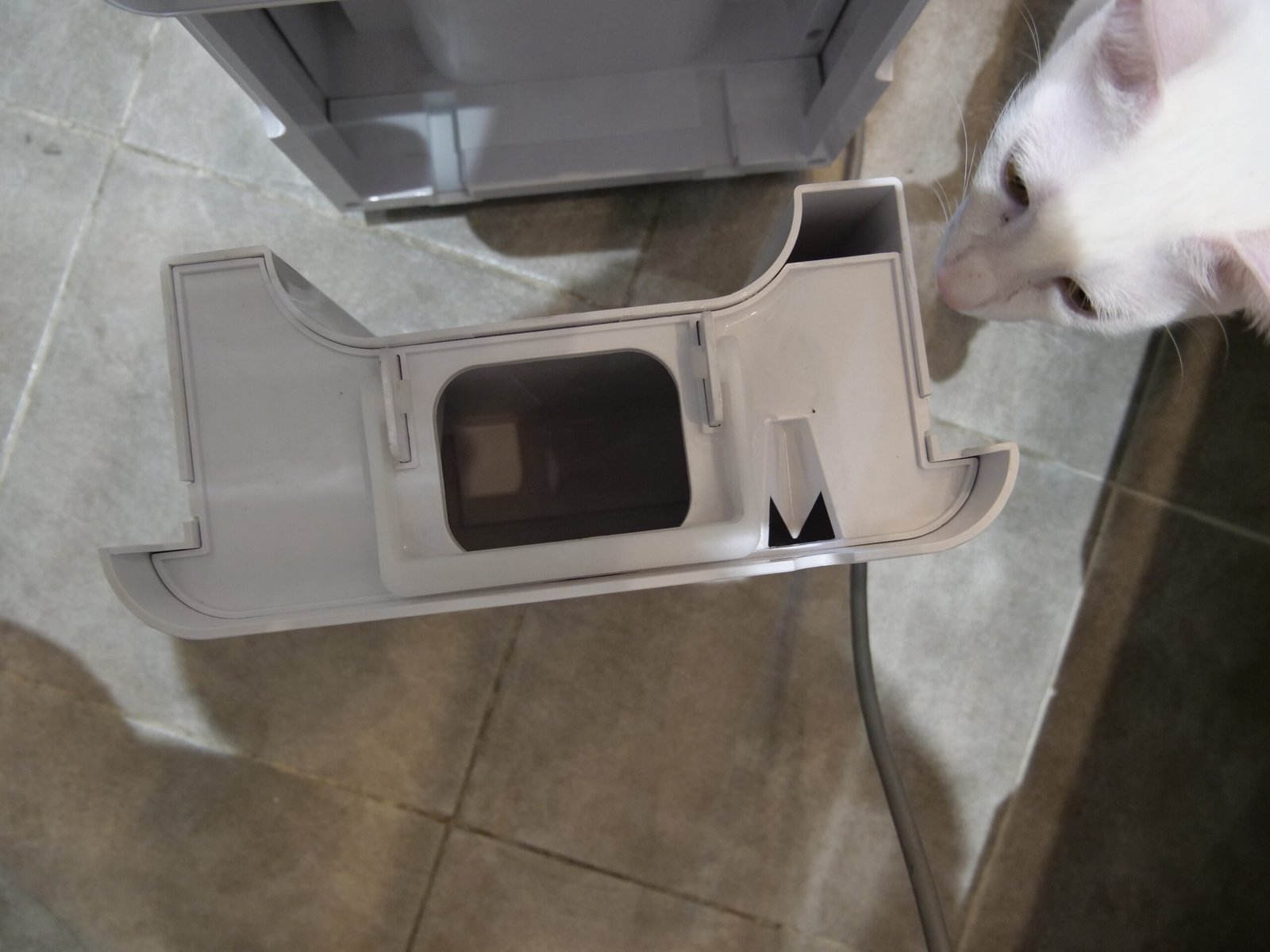
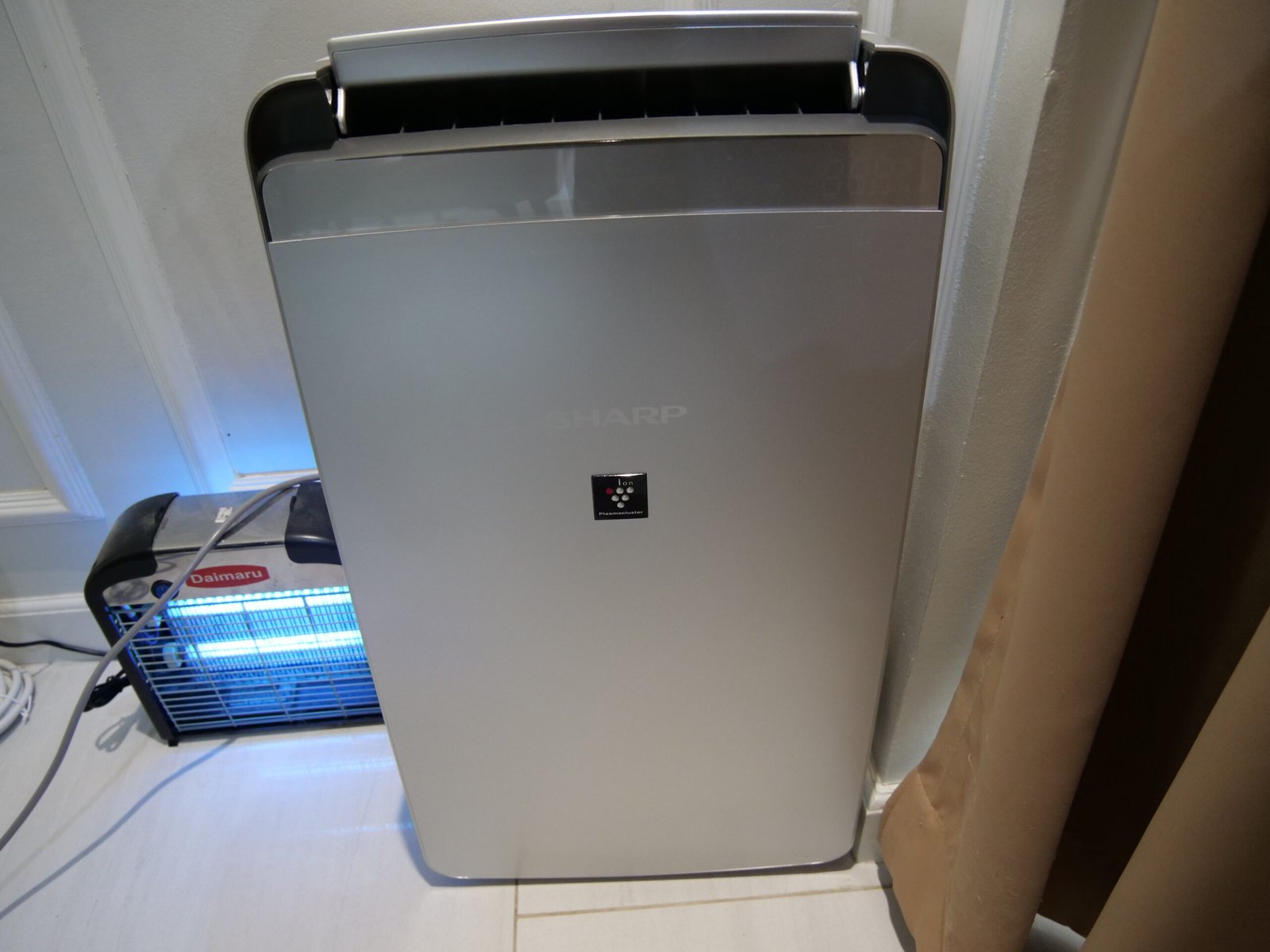


Which dehumidifier would I choose for a warehouse home with cats?
For the balance of purchase price, capacity and useful settings, Condura remains a strong option, but its missing control lock costs it a lot of points. With 28 cats in the warehouse where I live, I cannot overlook controls that their paws can change or switch off. Its drying features are useful; the control design is a major reservation in my recommendation.
For a smaller budget, Simplus is worth considering, especially near the prices I paid or previously saw. I liked its side airflow, colour indicator and performance. Delivery delays and its lack of a water tank carrying handle are inconveniences to consider.
If you want air purification and dehumidifying in the same machine, Sharp is the one I found most useful for both functions. I also appreciate its water tank handle. It is expensive, and I would judge running costs from measurements over a full session rather than a brief low wattage reading.
Kolin and Midea also have water tank handles, and their controls were less easily disturbed by resting cats during my use. Cherry Home has useful drying performance, but its price and lack of a tank handle affect how I judge its everyday value.
My main purpose is to keep the warehouse where I live dry while it houses a lot of appliances. For that routine, I consider electricity use, reliable settings and tank emptying together. If your cats climb onto appliances like mine do, give the controls and any control lock as much attention as the advertised daily dehumidification capacity.
Frequently asked questions about dehumidifiers in the Philippines
Which dehumidifier do I recommend most?
Of the six units I tested, Condura 20L is my overall recommendation for the balance of purchase price, capacity and useful settings. Simplus 12L is my budget choice when discounted, while Sharp is the one I preferred for combining air purification with dehumidifying. Each has drawbacks, so the best choice depends on what you need.
How much does a dehumidifier cost to run per hour?
At the example rate of ₱11 to ₱15 per kWh, a constant 200 W draw costs about ₱2.20 to ₱3.00 per hour. A constant 300 W draw costs about ₱3.30 to ₱4.50. Your bill depends on your actual electricity rate and how long the compressor runs; the comparison table shows the readings and assumptions for each unit.
Is a 20L dehumidifier’s water tank 20 litres?
Not necessarily. The 12L or 20L capacity label generally describes the amount of moisture the machine is rated to remove per day under specified test conditions. Tank size is a separate specification. The Simplus I tested, for example, is advertised as 12L but has a 2L tank.
Can a dehumidifier help dry clothes indoors?
Yes, it helped during my tests in rainy weather. I used Condura’s laundry mode, Simplus’s CNT setting and Sharp’s laundry drying function. Airflow direction matters when positioning the machine near hanging clothes: Condura blows upward, Simplus from the side, and Sharp has moving airflow.
What humidity setting did I use?
I used 40% on the Simplus when the room started around 80% humidity. On the Sharp, Auto seemed to maintain approximately 55% to 60%; I used the manual dehumidifying controls to choose a lower target. Room conditions and personal comfort matter when choosing a setting.
Can cats change a dehumidifier’s settings?
They can on some units. The Condura unit I tested has no control lock, and its top controls were easy for paws to disturb. This costs it a lot of points in my warehouse home with 28 cats. The Kolin buttons were harder for resting cats to operate, and Pepper's weight did not change the Midea settings during my use.
Which dehumidifiers have handles on their water tanks?
Among the six units I tested, Sharp, Kolin, Midea and Condura have water tank carrying handles. Simplus and Cherry Home do not. I mean a handle for carrying the removable tank to empty the collected water, rather than a handle on the whole machine.
Why do I use dehumidifiers in the warehouse where I live?
I live in the warehouse with 28 cats, and the space also houses many appliances. I use dehumidifiers to help keep it dry. That makes electricity use, water tank handling and controls that cats can disturb important parts of these reviews.
Does Sharp’s low wattage reading prove it is the cheapest to run?
No. The 10 to 30 W figures were readings I saw during parts of operation. They do not establish the electricity used across a full dehumidifying session. Comparing energy use over complete sessions would give a better basis for assessing running costs.
Prices, availability and the product versions sold through these links can change. The observations above describe the units and conditions I tested.
Written and tested by The Dogman. Read the RateNRave testing approach.

Pingback: Acerpure F1 vs F2 vs Midea Fan Review | RatenRave
Pingback: Shopee 10.15 Payday Sale Philippines 2026: Vouchers, Fans and Appliance Deals - RateNRave