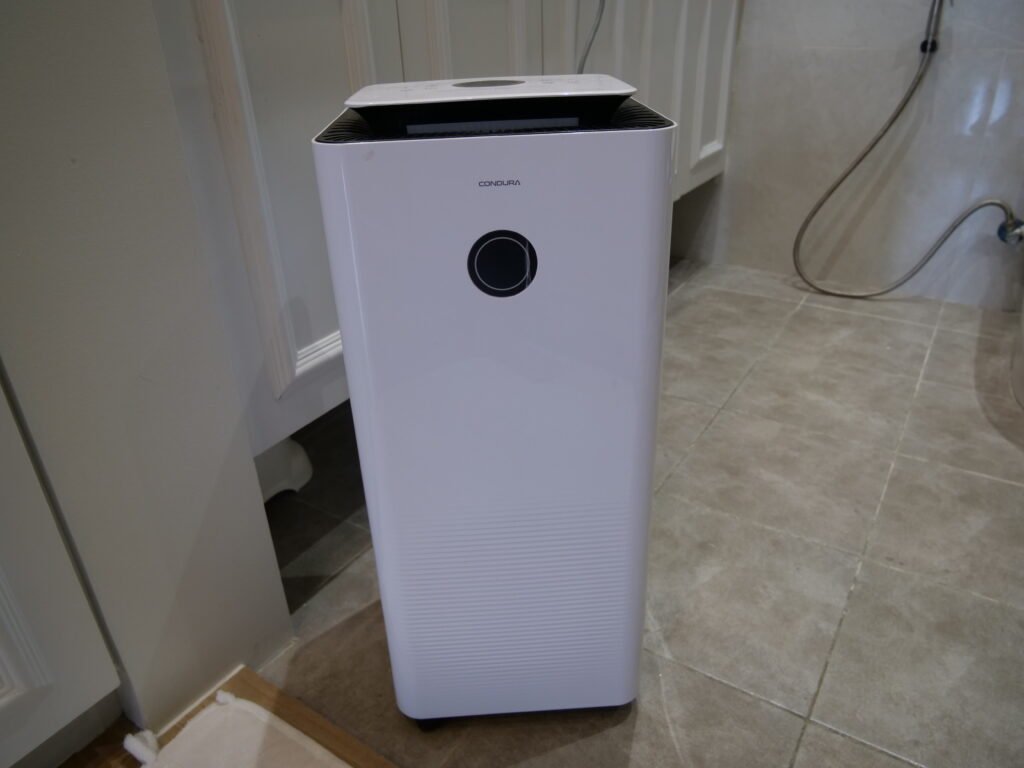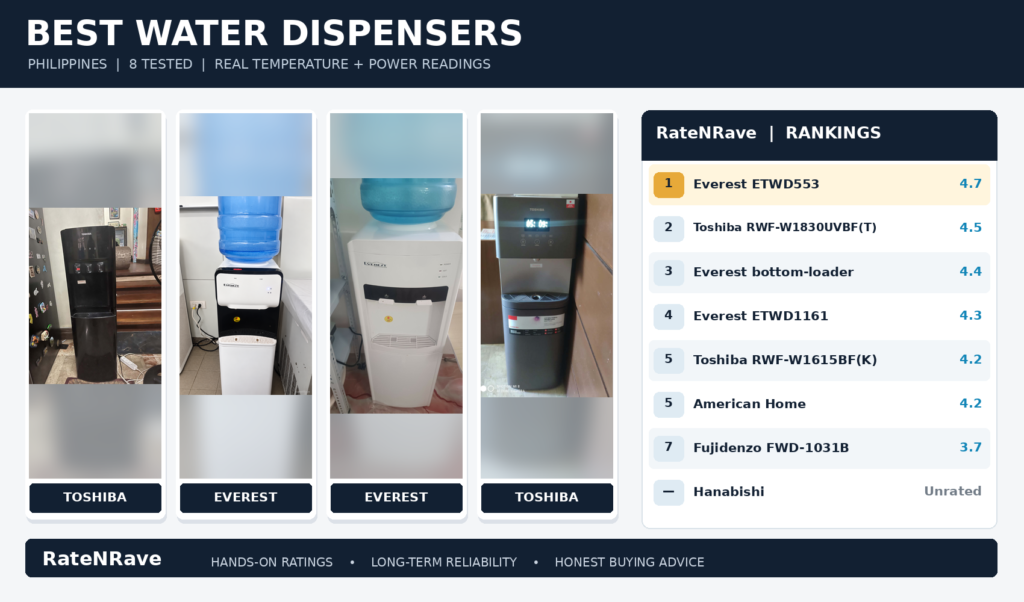
Man, a water dispenser in the Philippines is practically another member of the household. From Anthony’s pad to Yusuke’s home, there’s one lurking in a corner, ready for coffee, instant noodles, or an ice-cold drink after a commute that somehow takes longer than the entire Dark Tournament. Most of us buy purified water from the neighborhood refilling station. We know the delivery guy by his first name, forget his last name, and only remember to order another gallon when the last one starts making that hollow, tragic glug.
But which dispenser actually gets cold? Which one serves properly hot water? And what does the electricity meter say when the machine is running? I lined up eight units from Everest, Toshiba, Fujidenzo, American Home, and Hanabishi. Some surprised me. One turned into Yusuke Urameshi’s Puu buzzing around the kitchen like a tiny blue helicopter with absolutely no respect for peace and quiet. And one is now an expensive black-and-silver reminder that appliances can die before we are ready to let them go. Welcome to the Water Dispenser Dark Tournament: eight contenders, two thermometers’ worth of drama, and a power meter keeping everybody honest.
Quick verdict: 🛒 Compare Shopee & Lazada listings below The Everest ETWD553 (4.7/5) was my value surprise and delivered our coldest reading at 9.5°C. The premium Toshiba RWF-W1830UVBF(T) (4.5/5) has useful extras, but you pay for them. The Everest bottom-loader had impressive readings, although the pump sounds like it is auditioning for a horror film.
Disclosure: Some Shopee and Lazada links below are affiliate links. We may earn a commission from qualifying purchases at no extra cost to you. Our opinions and test readings are our own.
How we tested the water dispensers
I used a temperature gauge for dispensed hot and cold water and an Omni plug-in electricity meter to observe the power draw while each unit was operating. For the Everest ETWD1161, the empty glass was 27.6°C before the water test. The measurements below are snapshots from our own setup, not standardized laboratory results.
- Hot and cold: We recorded the water temperature actually measured in our glass, rather than copying the figure from a product listing.
- Electricity: The watts shown are our observed steady readings at a particular moment. A dispenser cycles its heater, compressor and sometimes a pump. These numbers are not 24-hour energy consumption, monthly electricity bills, or a controlled comparison of efficiency.
- Conditions matter: Room and glass temperature, refill frequency, thermostat state, time after starting, water volume, and probe placement can change results.
- Safety: Even the 67–78°C hot-water measurements here can burn skin. Child locks reduce risk but do not replace supervision.
Quick comparison: all eight water dispensers
| Water dispenser | Load | Hot water | Cold water | Observed watts | Rating | Link |
|---|---|---|---|---|---|---|
| Everest ETWD553 | Top | 73.8°C | 9.5°C | 85.37W | 4.7/5 | Shopee |
| Fujidenzo FWD-1031B | Top | 69°C | 12.3°C | 85.1W | 3.7/5 | Shopee |
| Toshiba RWF-W1615BF(K) | Bottom | 70°C | 12°C | 91.68W | 4.2/5 | Shopee |
| Toshiba RWF-W1830UVBF(T) | Bottom | 78°C | 12°C | 87.1W | 4.5/5 | Shopee |
| Hanabishi | — | Not tested | Not tested | Not tested | Not rated | Shopee |
| Everest ETWD1161 | Top | 67.1°C | 11.9°C | 84.9W | 4.3/5 | Shopee |
| American Home | — | 69.2°C | 11.6°C | 82.7W | 4.2/5 | Shopee |
| Everest bottom-loader | Bottom | 78.3°C | 10.8°C | 45.1W | 4.4/5 | Shopee |
Read the table this way: Lower is colder for cold water; higher is hotter for hot water. The watt column records a particular operating moment, not how much electricity the machine will use over a whole day. “Not rated” means I haven’t assigned a numerical score, not that the unit scored zero.
Everest ETWD553 — The little guy that froze the competition (4.7/5)
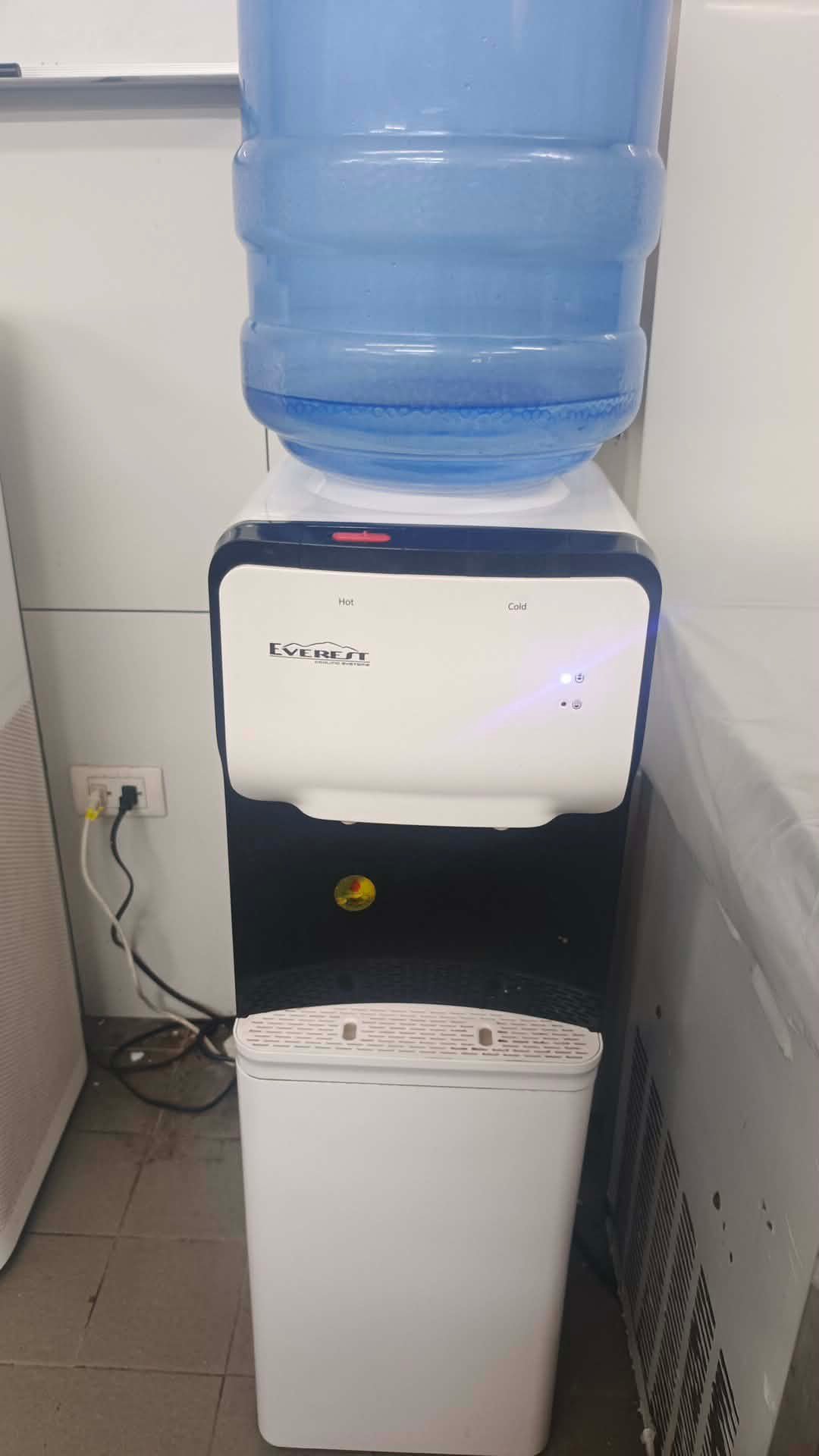
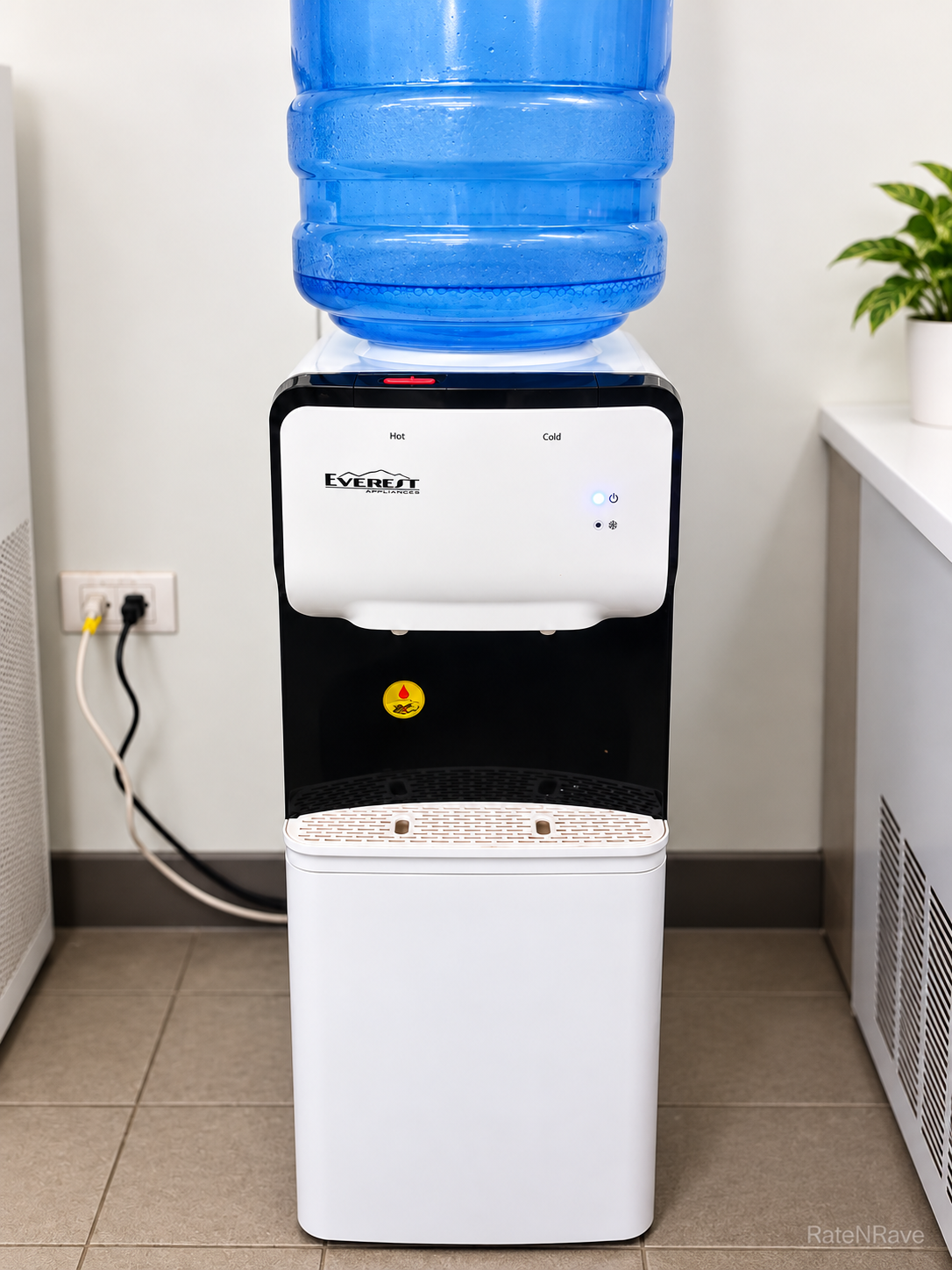
Got to say, wow. I did not expect this compact, light little fellow to be the refrigerator-adjacent hero of the test. We measured 9.5°C cold, the lowest cold-water reading in this lineup. The hot side reached 73.8°C, with an observed meter reading of 85.37W. There is a lot going for a machine that does its job without acting like it owns the place.
Everest’s own product information lists the ETWD553 as a top-loader with hot and cold dispensing, a child lock, and a9.2 kg net weight; it is about 27 × 29 × 85.8 cm. That helps explain why it is less of a wrestling match to move than a tall, bulky bottom-loader. The lock is nice to have, but I reckon a persistent eight-year-old could eventually figure it out. Please do not mistake a child lock for a substitute for adult supervision.
Good: Coldest water in our test, solid hot-water result, compact size, easy-to-move build, convincing value. Not so good: Top-loading still means lifting a water bottle; the child lock is not foolproof.
Where to buy: Everest ETWD553 on Shopee | Everest on Lazada.
Fujidenzo FWD-1031B — Good brochure, tiring repair history (3.7/5)
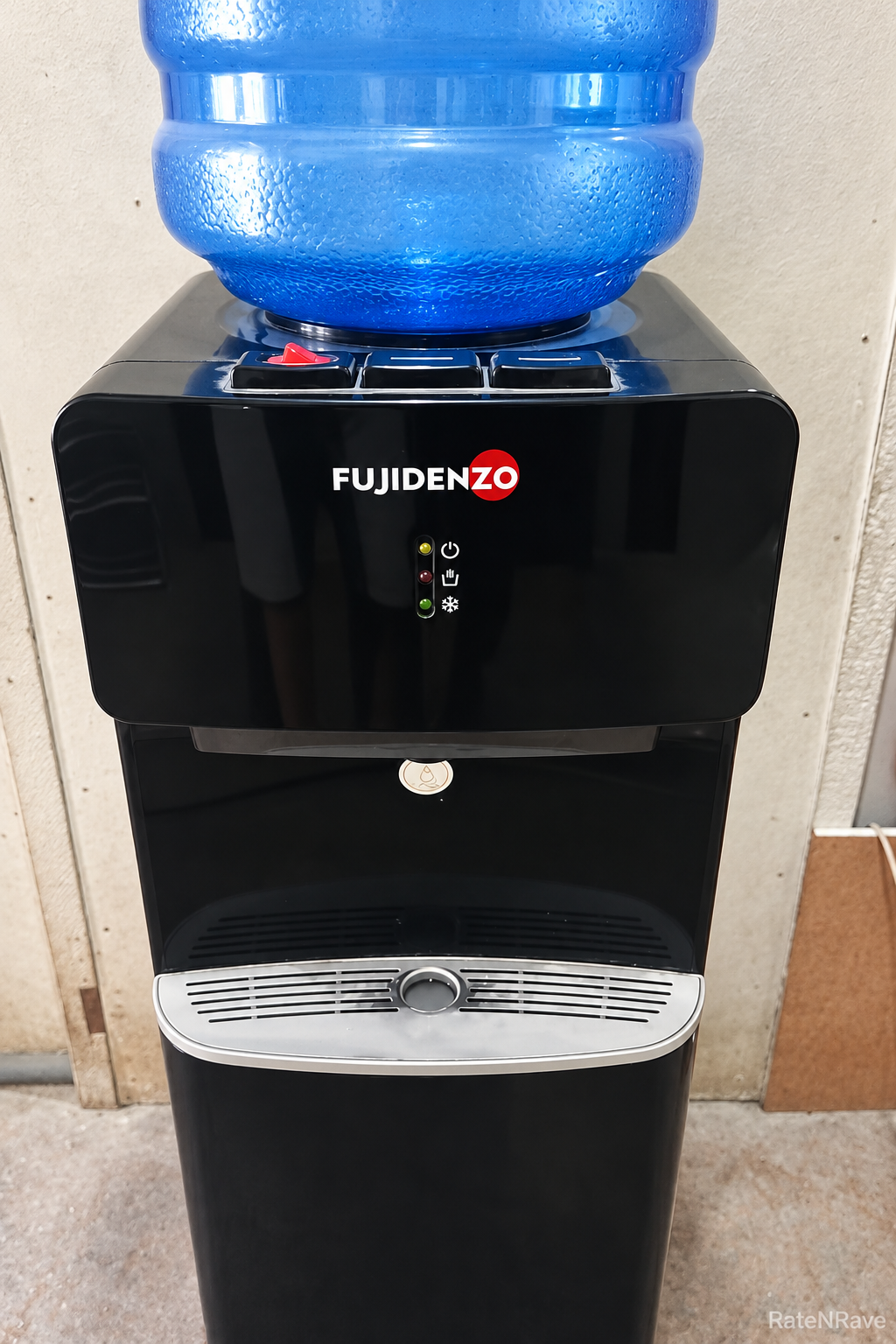
There is plenty of hoopla around Fujidenzo. The official specifications for the FWD-1031B include compressor cooling, hot/cold/warm options, a child safety lock for the hot-water control, and double overheating protection. All nice things to see on paper. My own machine, however, has a longer and less romantic story.
We measured 69°C hot, 12.3°C cold, and 85.1W on the meter. Perfectly usable? Yes. The kind of performance that makes me stand up and applaud? Not really. After roughly three years, the real headache began: repeated repairs, not just one unlucky visit to a technician.
And that is what knocks it down to 3.7/5. If I judged only today’s water temperatures, it might score higher. But this is RateNRave, not Rate-It-For-Five-Minutes-And-Forget-The-Rest. If an appliance keeps eating repair money, that counts.
Good: Compressor cooling, three water selections, safety features. Not so good: Ordinary measured temperatures and repeated repair problems with our particular unit.
Where to buy: Fujidenzo FWD-1031B on Shopee | Fujidenzo on Lazada. Official specifications: Fujidenzo product page.
Toshiba RWF-W1615BF(K) — Quiet manners, expensive watts (4.2/5)
This Toshiba bottom-loader is the more civilized one in the pump-noise department. The bottle hides underneath, so you are spared that traditional Filipino strength test of hoisting a full jug above shoulder height. Its safety lock feels good too, although, again, do not let your little nephew treat it as a puzzle challenge.
Our measurements came to 70°C hot, 12°C cold, and 91.68W at the moment we logged the steady reading. That wattage was the highest observed snapshot in this group, but not necessarily the highest total energy use. To compare electricity bills fairly, we would need each dispenser’s kWh measured over the same full period and operating conditions.
Toshiba’s advertised numbers may look stronger than what we saw, but the point here is not to declare a manufacturer wrong on the basis of one glass of water. It is to show exactly what we got. Very decent dispenser; just not my performance-per-peso favorite next to its pricier W1830 sibling.
Good: Bottom-loading convenience, quieter pumping than our Everest bottom-loader, useful safety lock.Not so good: Middling temperatures in this test and our highest instantaneous watt reading.
Where to buy: Toshiba RWF-W1615BF(K) on Shopee.
Toshiba RWF-W1830UVBF(T) — The premium student with extra subjects (4.5/5)
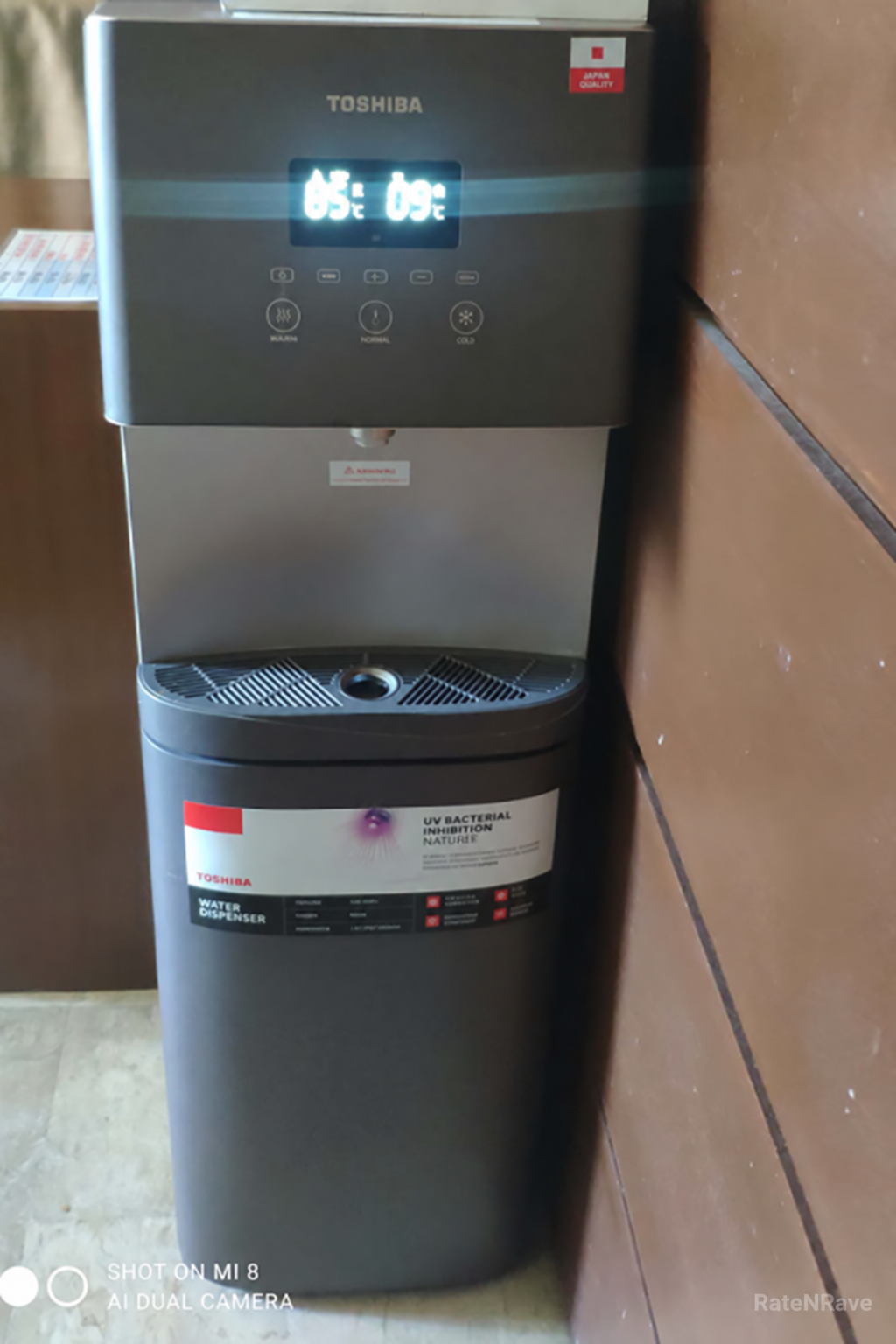
This is the expensive kid who arrived to school with four pens, two rulers, a scientific calculator, and an actual study plan. Toshiba lists UV sterilization, Eco Mode, and three temperature selections. It is a bronze-finished bottom-loader with soft-touch digital controls. Official specifications cite a 1.0 L hot tank, 3.6 L cold tank, heating power of 550W and cooling power of 100W. Those rated figures describe components and are not the same as the 87.1W we recorded during our spot measurement.
We measured 78°C hot, 12°C cold, and 87.1W. Its hot-water result was among our best. Toshiba’s official page specifies heated water at at least 90°C and chilled water at 10°C or below, which our snapshot did not reach. Room conditions, timing and how much water has already been dispensed can all matter; these are not identical test protocols.
So why 4.5/5 instead of an easy 5? Price. The UV and Eco features make it the most complete package in this particular lineup, but this comparison is about the water you get and what you pay, not who can fit the most words on a box.
Good: Excellent measured hot water, UV feature, Eco Mode, premium convenience. Not so good: Expensive; our temperatures did not match the official published targets during this test.
Where to buy: Toshiba RWF-W1830UVBF(T) on Shopee | Toshiba premium UV dispenser on Lazada.
Hanabishi — The Zeru of water dispensers: looks deadly, exits early (unrated)
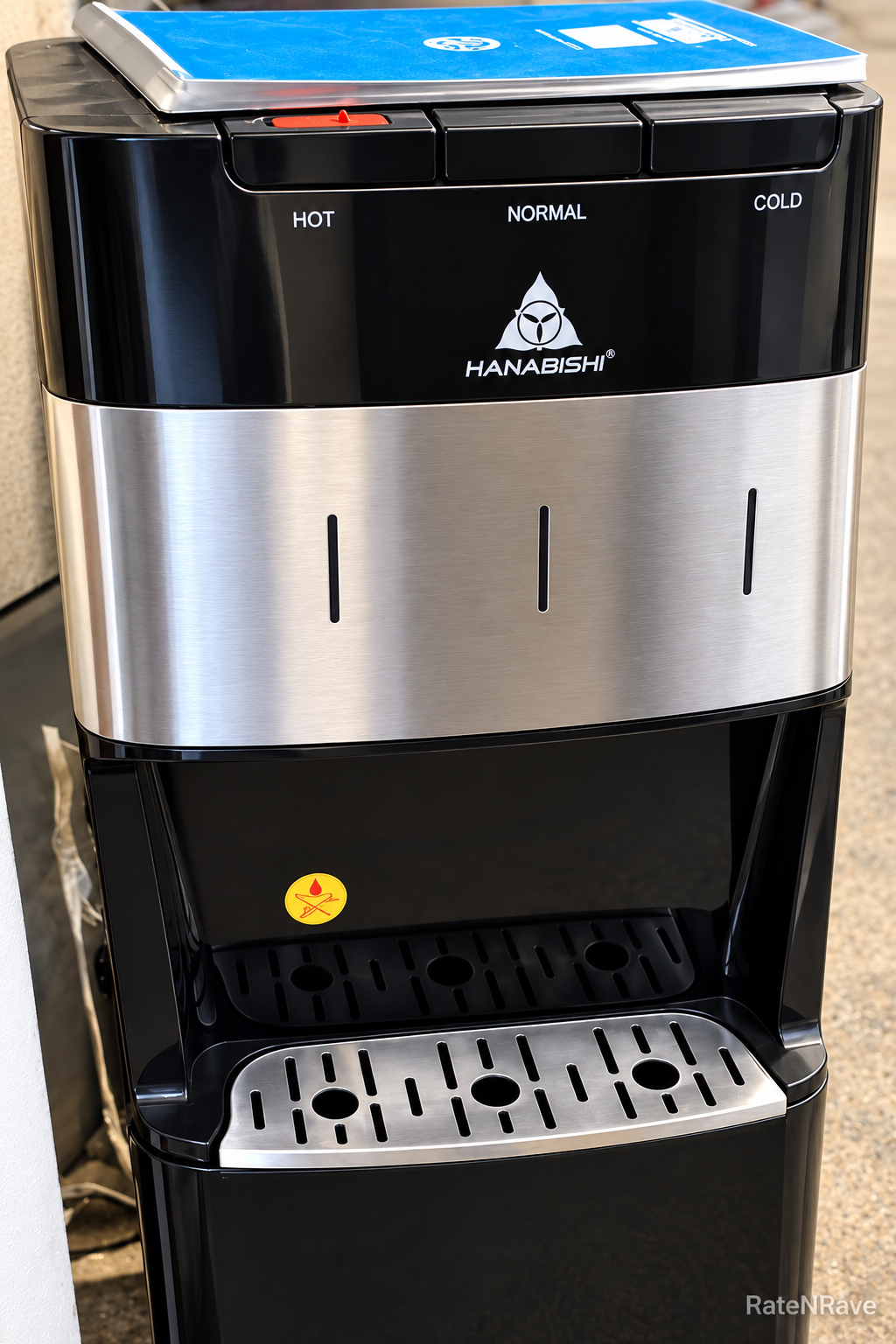
Now, look at this black-and-silver Hanabishi. Stylish. Intimidating. Standing there likeZeru from Yu Yu Hakusho, the big, bad-looking fighter who walked into the Dark Tournament radiating serious final-boss energy. You see a guy like that and expect an epic battle, flames everywhere, Hiei pushed to his limits. Instead, Hiei brings out the Dragon of the Darkness Flame and the poor fellow’s big moment is over before you can properly settle into your seat. THAT was our Hanabishi. To be fair, it was not literally dead on arrival: ours worked for around three years. But I expected years of dependable hot and cold water from that handsome, tough-looking cabinet. Instead, one day it just stopped. No last stand, no special move, not even a dramatic hiss. We checked the repair cost and found it would be more expensive to fix than to buy a replacement.
At that point I did not need a technician. I needed the Dark Tournament announcer to declare a knockout. All that presence, all that promise, and then—Zeru. Three years of service is not zero, but for an everyday appliance, I expected a longer run before repair costs made it a write-off. It looked ready to showcase some badass moves. The only move it showed us in the end was permanent retirement. For our particular unit, I cannot recommend it. One failed machine is not evidence that every Hanabishi dispenser will end the same way.
We did not log hot temperature, cold temperature, or watts for this failed unit. No fake numbers, no made-up score. We describe the failure of our particular unit rather than making claims about the entire brand.
Product link provided: Hanabishi dispenser on Shopee | Hanabishi dispenser on Lazada.
Everest ETWD1161 — A respectable sibling, but the cheaper brother won (4.3/5)
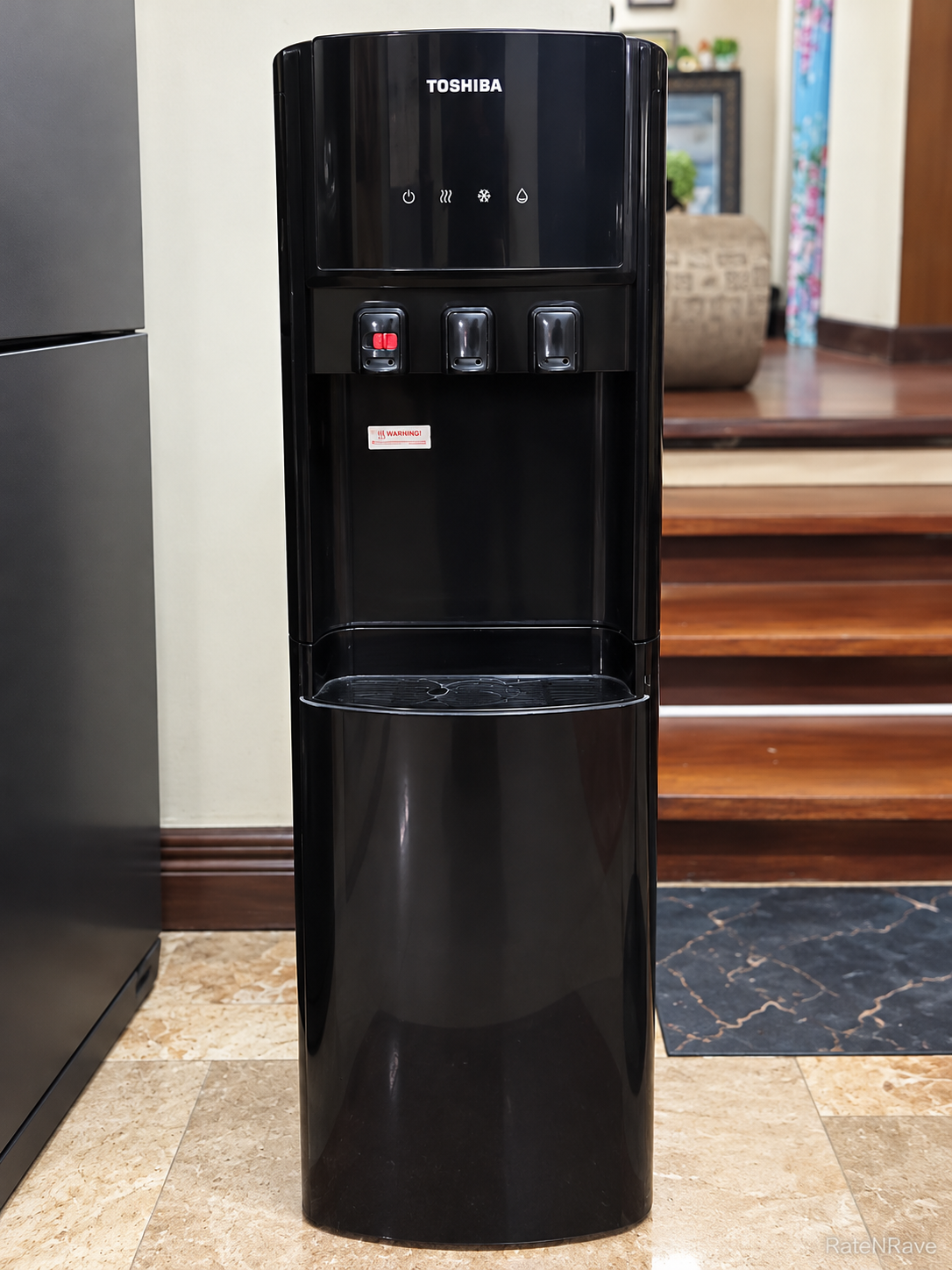
This Everest is perfectly decent. Not a Dark Tournament champion, not a defeated henchman either. No need to start throwing slippers or summoning Spirit Guns. It dispenses water and gets on with its day. We recorded 67.1°C hot, 11.9°C cold, and 84.9W. For context, our empty glass was at 27.6°C before the test.
The ETWD1161 is a top-loader and Everest’s official listing describes a cabinet and a stainless-steel water tank. It gives you practical storage and the familiar hot/cold routine. But there is a funny bit: during our shopping comparison it cost more than the ETWD553, while our ETWD553 went colder and hotter. That is awkward, like buying the more expensive seat and finding out your cousin in economy got the better meal.
Good: Practical top-loader, cabinet storage, acceptable cold water. Not so good: Our hottest-water result was only 67.1°C; in this particular test the cheaper ETWD553 performed better.
Where to buy: Everest ETWD1161 on Shopee.
American Home — Best dressed at the water station (4.2/5)
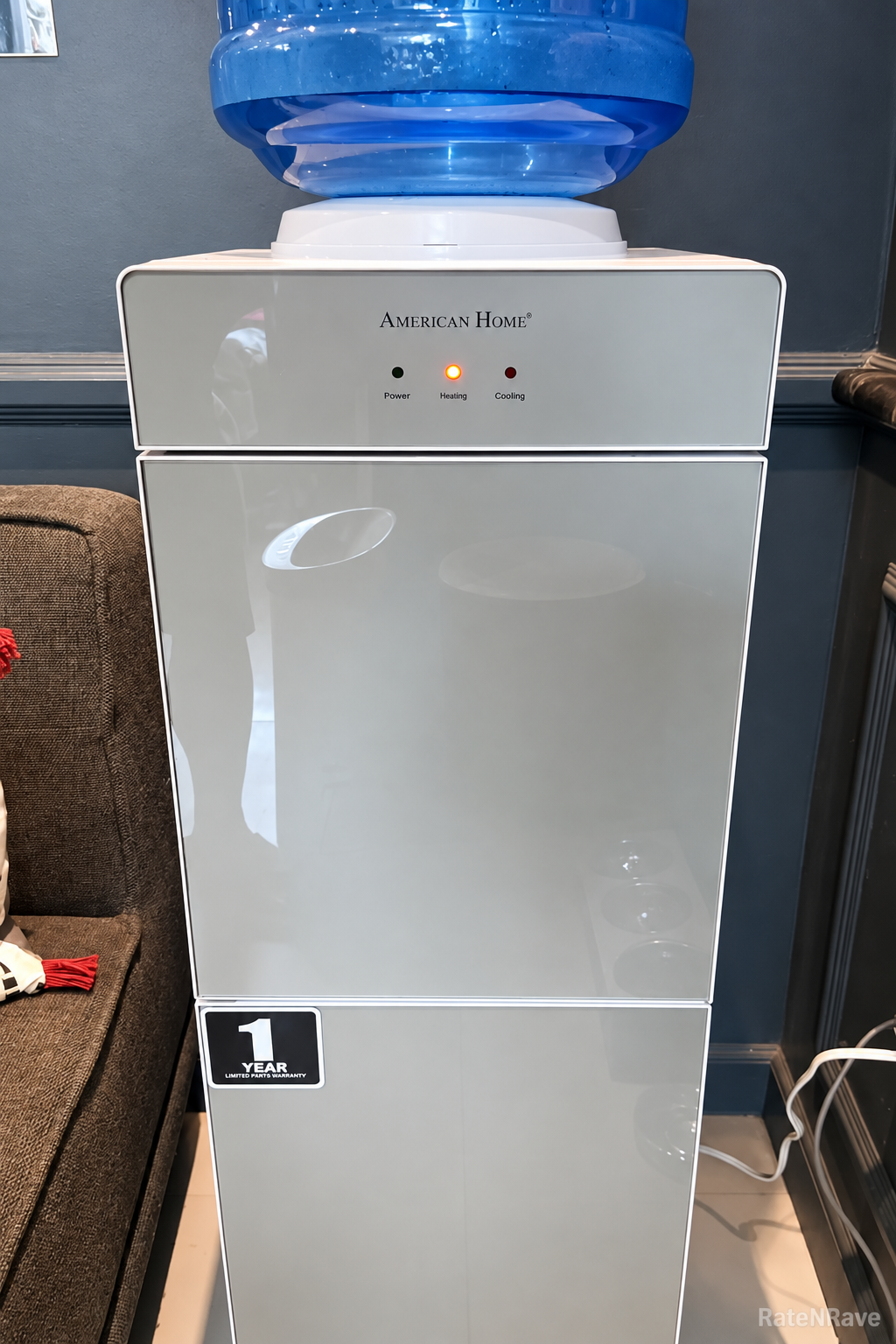
I will give this one credit: it looks good. Sometimes a dispenser stands in the room like a black plastic filing cabinet. This American Home has a much nicer appearance, and I appreciate the hidden storage underneath. That’s the little quality-of-life detail you notice after living with something, not after staring at a spec sheet for 30 seconds.
We got 69.2°C hot, 11.6°C cold, and 82.7W on the meter. Nothing to write a love letter about, but not a disaster either. The most appealing part is the combined package of looks, extra storage and functional water temperatures. I give it 4.2/5 for its looks, useful storage and decent overall performance.
Good: Attractive design, concealed storage, functional temperatures. Not so good: No standout temperature result in this test.
Where to buy: American Home water dispenser on Shopee.
Everest bottom-loader — Yusuke Urameshi’s Puu lives in the pump (4.4/5)
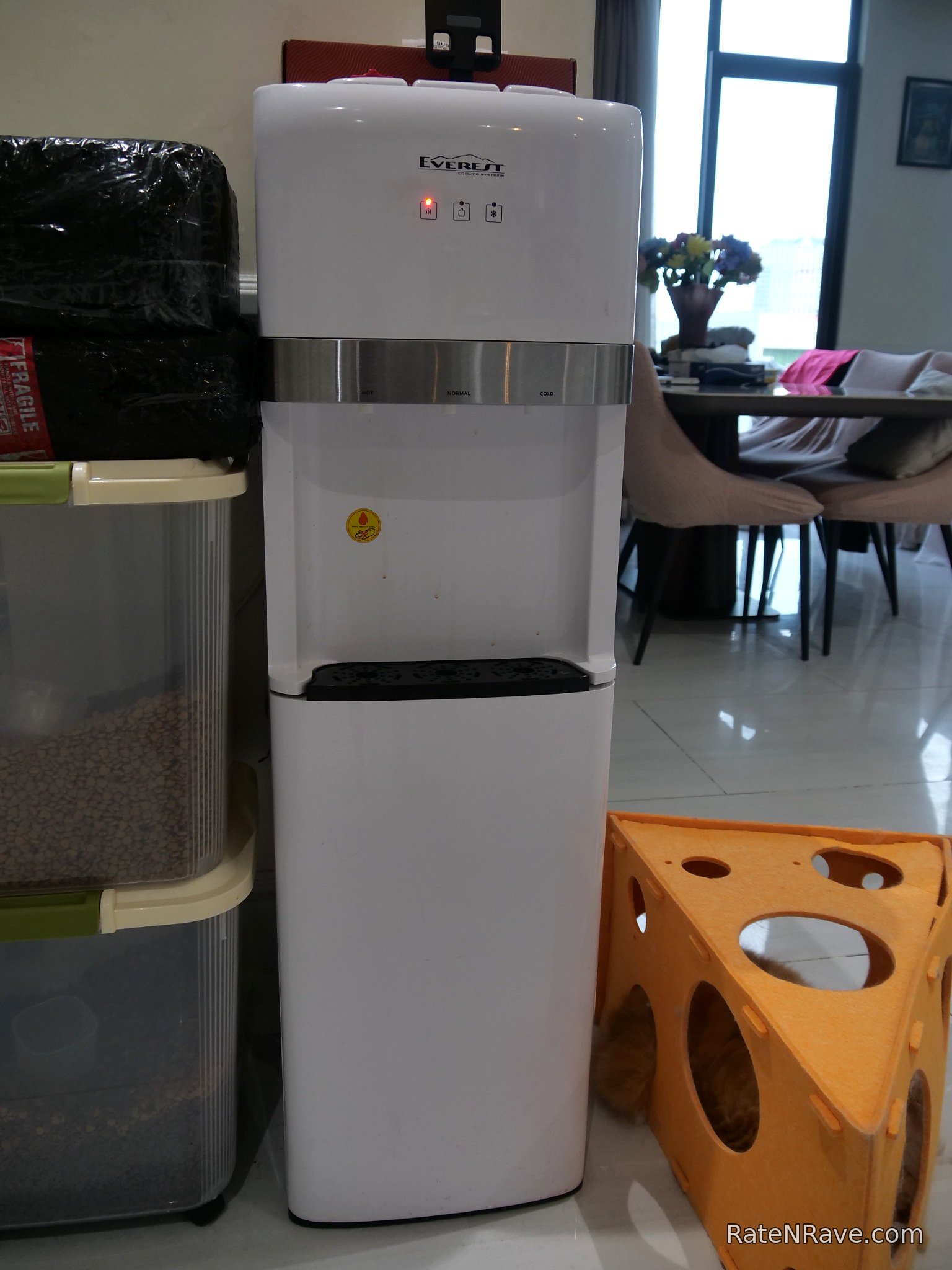
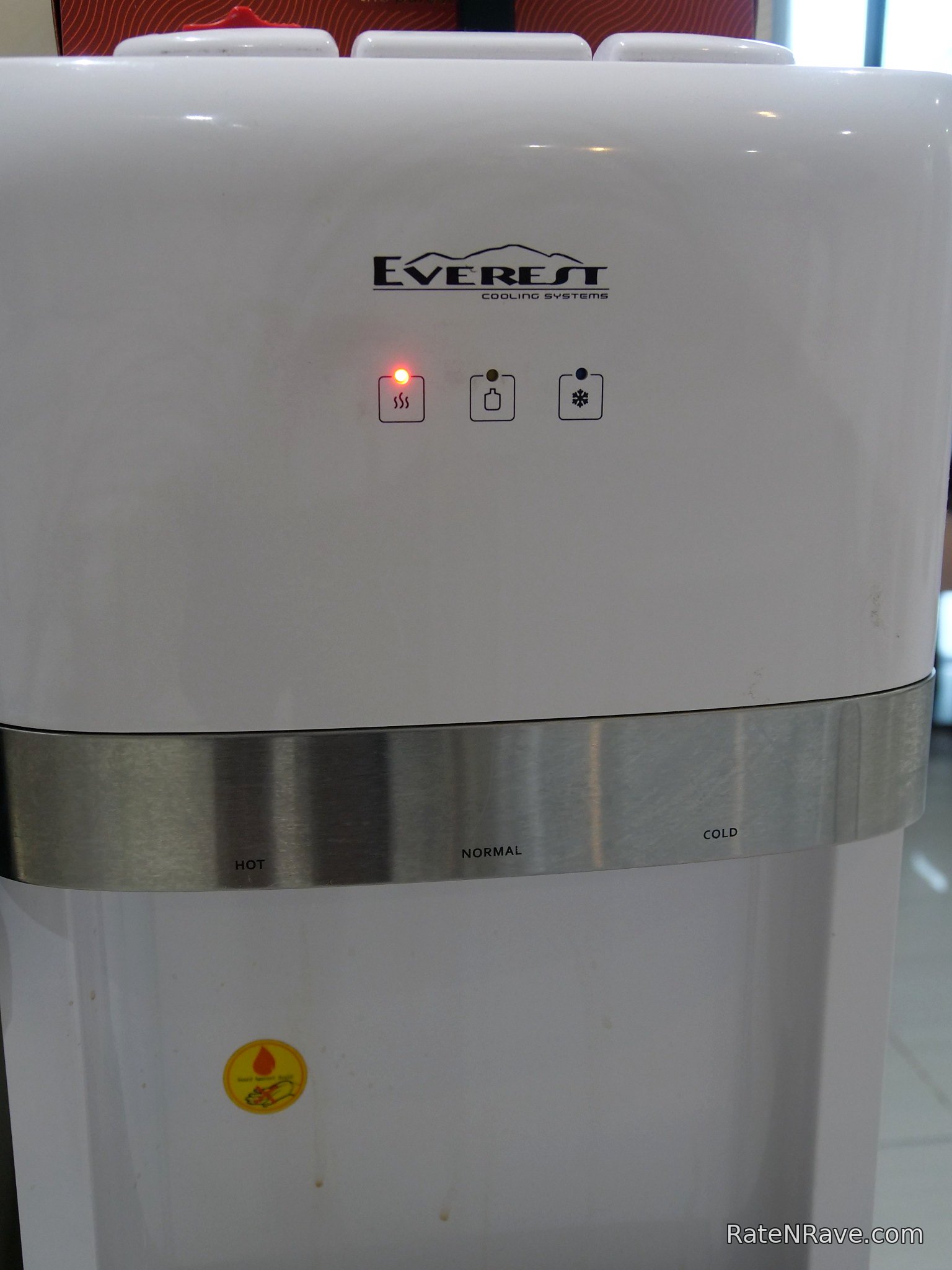
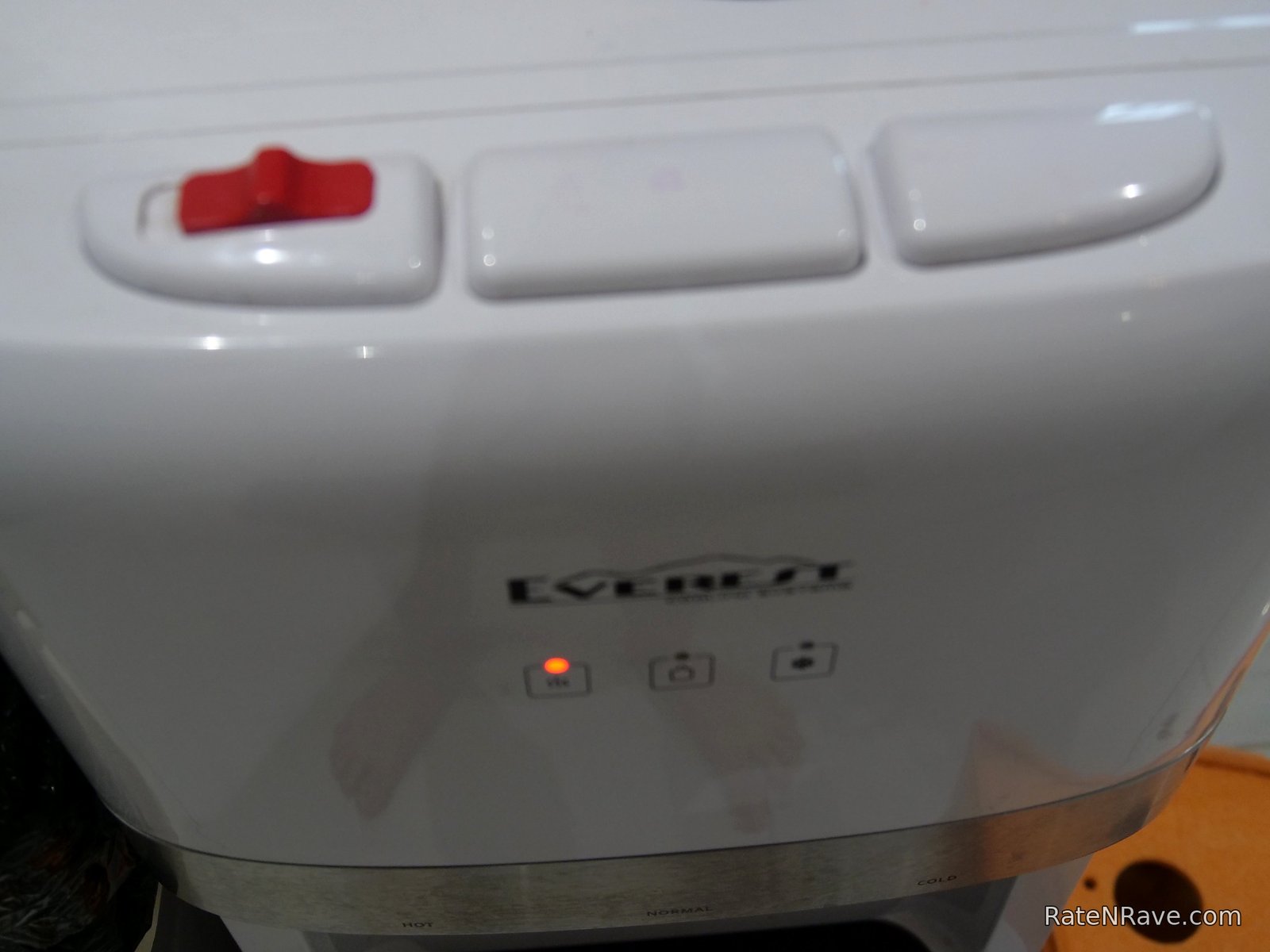
This one has personality. Too much personality. When that pump starts dragging water out of the bottle, I swear it sounds like Yusuke Urameshi’s Puu buzzing around the kitchen—a chubby little spirit beast doing helicopter laps while somebody shakes a bag of angry mosquitoes. Puu! Puu! Puu! BROTHER, I JUST WANT WATER, NOT A GUEST APPEARANCE FROM YU YU HAKUSHO. The whole room knows when this thing is thirsty. Thankfully, the pump only makes its dramatic entrance when it needs to refill, not all day long.
But look at these numbers: 78.3°C hot, 10.8°C cold, and just 45.1W on our meter at the recorded moment. That was the lowest instant watt reading in the lineup. It does not prove the lowest overall electricity use because the heater and compressor cycle. Still, the temperature performance impressed me.
The real-world story is not spotless. The heating mechanism failed shortly after delivery. We needed the machine quickly, so we brought it directly to the Everest warehouse in the south. The warranty service was surprisingly straightforward; after a few days, the issue was addressed and the unit kept working. I am not ignoring the early failure just because the people who fixed it were nice. Both things count.
If you want a bottom-loader and can tolerate Puu going full helicopter mode every time the tank refills, this one deserves a look. I give it 4.4/5: strong temperatures and a helpful warranty experience earn points, but that early failure and noisy pump keep it from scoring higher.
Good: Strong hot and cold readings, lowest observed watt snapshot, positive warranty-service experience. Not so good: Early heating failure and a very loud water pump.
Where to buy: Everest bottom-loading dispenser on Shopee | Everest bottom-loader on Lazada.
The verdict: which water dispenser would I actually pick?
Best value and biggest surprise: Everest ETWD553. It made the coldest water we measured and still managed decent hot water, all from a light and simple top-loading machine. My favorite based on this set of results.
Best premium features: Toshiba RWF-W1830UVBF(T). UV, Eco Mode and a solid hot-water reading make it attractive if you want extras and are comfortable paying for them.
Most interesting bottom-loader: The Everest with Yusuke’s Puu apparently trapped in its pump. Good measured water temperatures and a lower watt snapshot, but the early heating failure and that noisy refill circus absolutely belong in the review.
Units that gave me pause: Fujidenzo because of repeated repairs, and our Hanabishi because it died after three years and became too expensive to fix. Long-term reliability is part of value, not an optional footnote.
Next time we test, I’d love to do a controlled 24-hour electricity-use test in kWh, with the same water volumes and room conditions, to see whether those single watt readings tell the same story over a full day. Until then, these are honest readings from the machines we actually used. No magic lab, no brochure cosplay.
Manufacturer specification references
Everest official dispenser catalogue (ETWD553 and ETWD1161 details);Fujidenzo FWD-1031B product page; Toshiba RWF-W1830UVBF(T) official page. Manufacturer specifications and our measurements are intentionally distinguished in the review.
Photo note: Some photographs are visibly enhanced and labeled accordingly; original owner images are shown where available. Our observed test readings are not standardized laboratory measurements.
🛒 Where to Buy: Shopee and Lazada
Want to check prices, seller warranties and stock? Use the links below for the eight dispensers in this comparison. Links may earn RateNRave a small affiliate commission at no additional cost to you.
Everest ETWD553
Check the product details, seller and warranty terms before ordering.
Fujidenzo FWD-1031B
Check seller warranty and delivery details before ordering.
Toshiba RWF-W1615BF(K)
Toshiba RWF-W1830UVBF(T)
Premium model with UV features.
Hanabishi dispenser
See available Hanabishi dispensers and compare their features.
Everest ETWD1161
American Home dispenser
See seller details and product information.
Everest bottom-loading dispenser
Compare seller offers, delivery options and warranties.
Check the seller’s product details, voltage, warranty and delivery terms before ordering.